

Trust in the Philippines is not eroding — it is evolving.
Filipino consumers are navigating a more complex trust environment as they live across two media worlds. One is grounded in credibility, quality, and verification. The other thrives on speed, influence, and cultural relevance. Brands are expected to show up in both — and the tension between them is shaping how trust is built, transferred, and lost.
Recent learnings from Kantar Media Reactions 2025 Philippines reinforce a simple but often overlooked truth: Reach alone no longer guarantees trust. Understanding this distinction is an important strategic advantage brands can hold.
1. Trust Is Institutional, Influence Is Algorithmic
Filipinos still know where to go for truth. Television, established news brands, print, and other traditional advertising environments continue to carry authority, especially in a climate of misinformation and skepticism. At the same time, influence has shifted decisively toward digital platforms. Online video, social feeds, streaming, social commerce, and influencer content now dominate discovery and daily decision making.
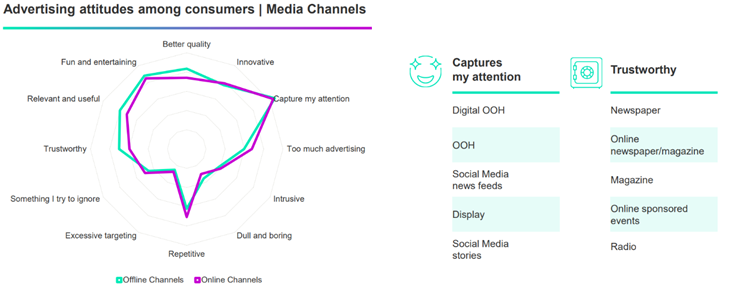
For brands, this creates a credibility paradox: trust lives in institutions, while influence lives in platforms. The most effective strategies no longer choose between the two, but connect them.
2. Traditional Media Has Become a Verification Layer
Traditional media continues to perform a critical function in the trust ecosystem. They are no longer just about reach, but legitimacy. Even as daily consumption shifts online, TV, print, and trusted news environments now function as places where messages are validated, not merely broadcast. They signal seriousness, accountability, and quality — attributes that matter deeply when consumers are actively filtering misinformation.
For brands, these channels have become credibility anchors. This is where high stakes claims belong, where reputation is reinforced, and where trust is protected.
3. Digital Drives Attention — and Skepticism
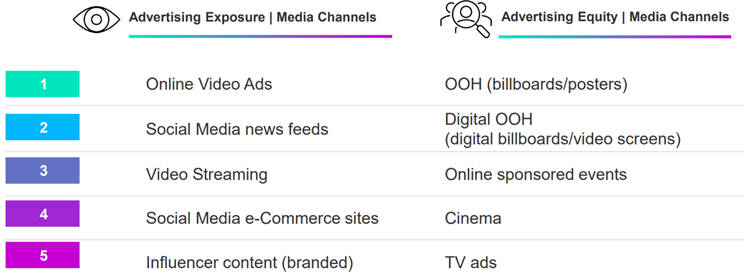
Digital platforms dominate attention and daily life in the Philippines as online video, social feeds, streaming platforms, social commerce, and influencer content drive ad exposure. This is where discovery happens and where trends are formed, but they also carry the highest levels of skepticism. Consumers now separate exposure from belief and are acutely aware of misinformation risks, ad clutter, and persuasive intent. Social platforms surface information; trusted channels confirm it.
Brands that assume visibility automatically builds trust often overestimate their impact. The role of digital is not to replace credibility, but to translate it into relevant content especially as they have the upper hand in engaging a captured audience.
4. Influence Is Personal, Not Corporate
Influencers have evolved from media amplifiers into trust intermediaries. In a time and landscape where authenticity consistently outperforms scale, micro and nano creators often drive deeper impact than celebrities because they feel closer, more believable and more relevant. Crucially, influencer credibility is strongest when supported by trusted environments elsewhere. Influence without proof feels transactional; influence backed by credibility feels earned.
For brands, this shifts influencer strategy from a reach tactic to a reputation decision.
5. Innovation Requires Trust Anchors
Generative AI presents creative opportunity, but also introduces new trust considerations. While consumers are broadly positive about AI’s potential, confidence declines when AI is used in advertising, particularly among younger audiences. This indicates that while AI can enhance creativity, excessive use may also damage perceptions of quality and trust, especially in online platforms where skepticism is more prevalent.
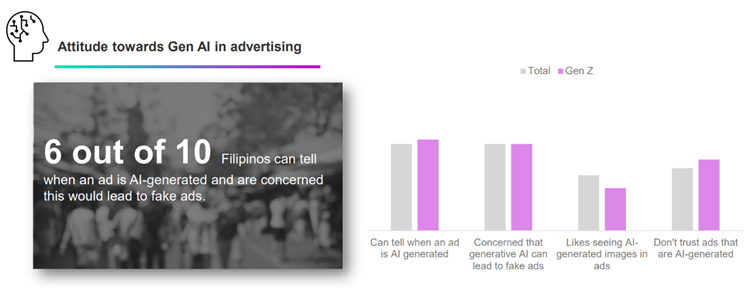
Crucial for brands to reinforce the importance of contextual trust. Innovation is more readily accepted when anchored in environments already associated with quality and credibility.
The brands that win in the Philippines will stop treating media as a channel by channel optimization exercise and start treating it as a trust architecture.
• Use traditional media as credibility anchors for high stakes messages
• Use digital platforms as relevance, discovery, and conversion engines
• Treat influencers as long term trust partners, not short term amplifiers
• Apply AI and innovation with restraint, transparency, and context
• Design ecosystems where each channel reinforces the others
Filipino consumers have not lost trust in media nor advertising. They have learned to protect it.
They know where trends emerge. They know where truth lives. And they expect brands to understand the difference.
In the Philippines, credibility earns belief — but relevance earns action. The brands that succeed will be those that stop choosing between the two and start designing for both.
To stay informed, take a moment to explore the latest trends shaping the landscape here.
Filipino consumers are navigating a more complex trust environment as they live across two media worlds. One is grounded in credibility, quality, and verification. The other thrives on speed, influence, and cultural relevance. Brands are expected to show up in both — and the tension between them is shaping how trust is built, transferred, and lost.
Recent learnings from Kantar Media Reactions 2025 Philippines reinforce a simple but often overlooked truth: Reach alone no longer guarantees trust. Understanding this distinction is an important strategic advantage brands can hold.
Five Truths on Media Trends:
1. Trust Is Institutional, Influence Is AlgorithmicFilipinos still know where to go for truth. Television, established news brands, print, and other traditional advertising environments continue to carry authority, especially in a climate of misinformation and skepticism. At the same time, influence has shifted decisively toward digital platforms. Online video, social feeds, streaming, social commerce, and influencer content now dominate discovery and daily decision making.
For brands, this creates a credibility paradox: trust lives in institutions, while influence lives in platforms. The most effective strategies no longer choose between the two, but connect them.
2. Traditional Media Has Become a Verification Layer
Traditional media continues to perform a critical function in the trust ecosystem. They are no longer just about reach, but legitimacy. Even as daily consumption shifts online, TV, print, and trusted news environments now function as places where messages are validated, not merely broadcast. They signal seriousness, accountability, and quality — attributes that matter deeply when consumers are actively filtering misinformation.
For brands, these channels have become credibility anchors. This is where high stakes claims belong, where reputation is reinforced, and where trust is protected.
3. Digital Drives Attention — and Skepticism
Digital platforms dominate attention and daily life in the Philippines as online video, social feeds, streaming platforms, social commerce, and influencer content drive ad exposure. This is where discovery happens and where trends are formed, but they also carry the highest levels of skepticism. Consumers now separate exposure from belief and are acutely aware of misinformation risks, ad clutter, and persuasive intent. Social platforms surface information; trusted channels confirm it.
Brands that assume visibility automatically builds trust often overestimate their impact. The role of digital is not to replace credibility, but to translate it into relevant content especially as they have the upper hand in engaging a captured audience.
4. Influence Is Personal, Not Corporate
Influencers have evolved from media amplifiers into trust intermediaries. In a time and landscape where authenticity consistently outperforms scale, micro and nano creators often drive deeper impact than celebrities because they feel closer, more believable and more relevant. Crucially, influencer credibility is strongest when supported by trusted environments elsewhere. Influence without proof feels transactional; influence backed by credibility feels earned.
For brands, this shifts influencer strategy from a reach tactic to a reputation decision.
5. Innovation Requires Trust Anchors
Generative AI presents creative opportunity, but also introduces new trust considerations. While consumers are broadly positive about AI’s potential, confidence declines when AI is used in advertising, particularly among younger audiences. This indicates that while AI can enhance creativity, excessive use may also damage perceptions of quality and trust, especially in online platforms where skepticism is more prevalent.
Crucial for brands to reinforce the importance of contextual trust. Innovation is more readily accepted when anchored in environments already associated with quality and credibility.
What the Strongest Brands Should Do Differently:
The brands that win in the Philippines will stop treating media as a channel by channel optimization exercise and start treating it as a trust architecture.• Use traditional media as credibility anchors for high stakes messages
• Use digital platforms as relevance, discovery, and conversion engines
• Treat influencers as long term trust partners, not short term amplifiers
• Apply AI and innovation with restraint, transparency, and context
• Design ecosystems where each channel reinforces the others
The Bottom Line
Filipino consumers have not lost trust in media nor advertising. They have learned to protect it.They know where trends emerge. They know where truth lives. And they expect brands to understand the difference.
In the Philippines, credibility earns belief — but relevance earns action. The brands that succeed will be those that stop choosing between the two and start designing for both.
To stay informed, take a moment to explore the latest trends shaping the landscape here.