

Media Reactions 2026 is Kantar’s annual ad equity study, offering a holistic view of the media landscape with intelligence from over 23,000 consumers across 33 markets and 800 senior marketers around the world. Now in its seventh year, the study uses Kantar’s ad equity metric, which measures consumers’ preference and presence on each channel, to show where advertising is most welcome and where marketers place their trust.
Consumers complain less about ads, marketers doubt more
There is good news for advertisers this year: consumers are complaining less about ads. Negative sentiment has gone down from 20% to 17% which is a significant change among 23,000 consumers. Fewer people say there's too much advertising, fewer people find ads repetitive, and fewer people actively tune them out compared to last year.Campaigns land around seven times harder with receptive audiences, so a more receptive audience means that the same media spend now works harder than it did a year ago. This has been a continuing trend in the last few years. The many channels marketers now juggle are also working well together. According to Kantar’s LIFT+ database, 43% of campaign impact comes from channels working in combination, compared to 18% pre-2014.But marketers themselves feel less sure than ever. With AI fast becoming a fundamental part of the media landscape, four in ten marketers now doubt they are getting the fundamentals of the media mix right, such as integrating campaigns across channels and tailoring creative content. As AI and the creator economy mature, marketers need to focus on the right signals to ensure consumers remain receptive, and avoid a return to the days when people actively avoided ads at scale.
The forces reshaping media: AI and Creators
Marketers are moving faster than consumers on AI assistants
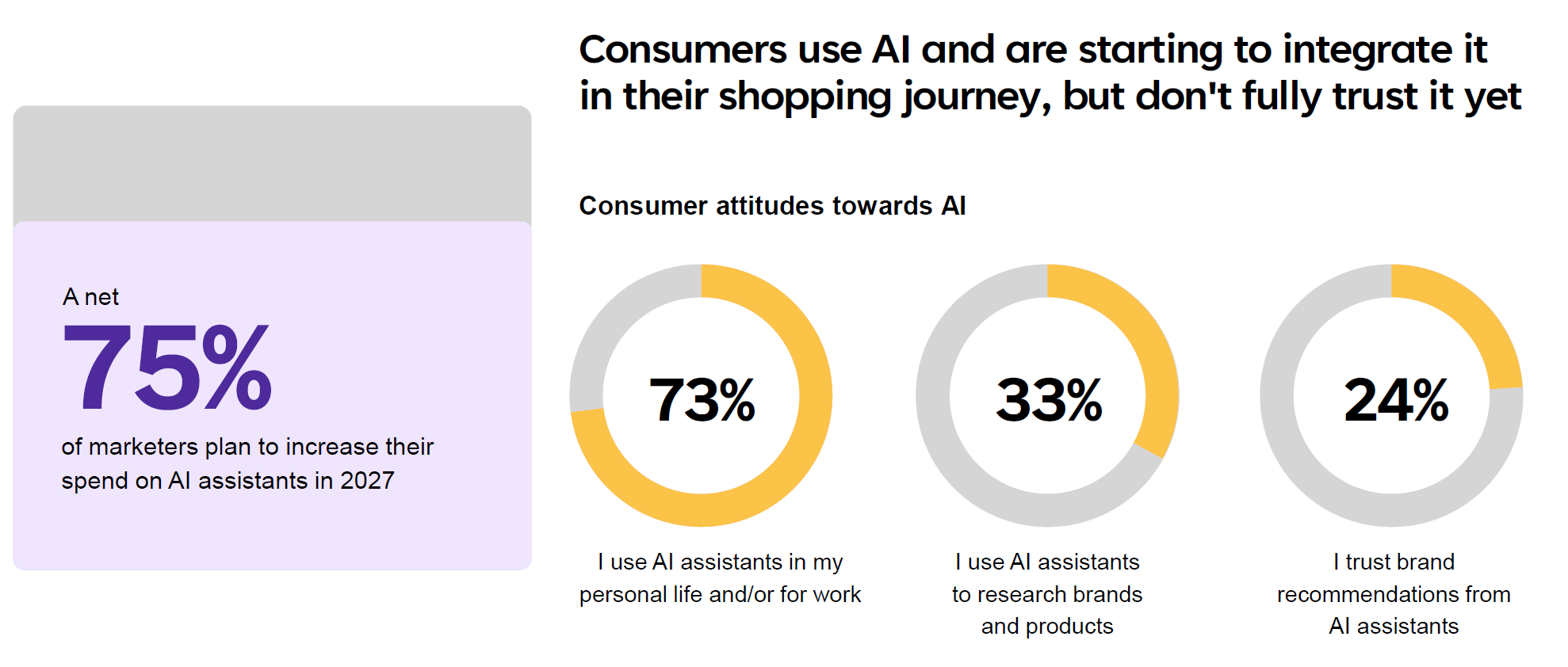
Almost three quarters of consumers globally (73% across 33 markets) use AI assistants in their personal or working lives, and a third (33%) already research brands and products through them. Trust, however, is lagging behind: only 24% trust brand recommendations from AI assistants, and as an advertising channel AI assistants rank 20th out of 27 in ad equity.
Marketers are moving ahead regardless. A net 75% plan to increase their investment in visibility in AI assistants in 2027, including paid ads, and over six in ten (62%) believe the future of AI for brands lies in recommendations and guidance.
Budgets moving ahead of consumer trust is smart planning, but it also means there is work to do. Brands that don’t engage with AI in the right way risk being filtered out of the machine mind altogether. To be surfaced by AI assistants and acted on by people, brands need to be meaningfully different to both humans and machines. The space is still innovating at pace, so test now, test with your eyes open, and help shape how these interactions work rather than waiting to be cited.
Creator investment is shifting from reach to cultural relevance
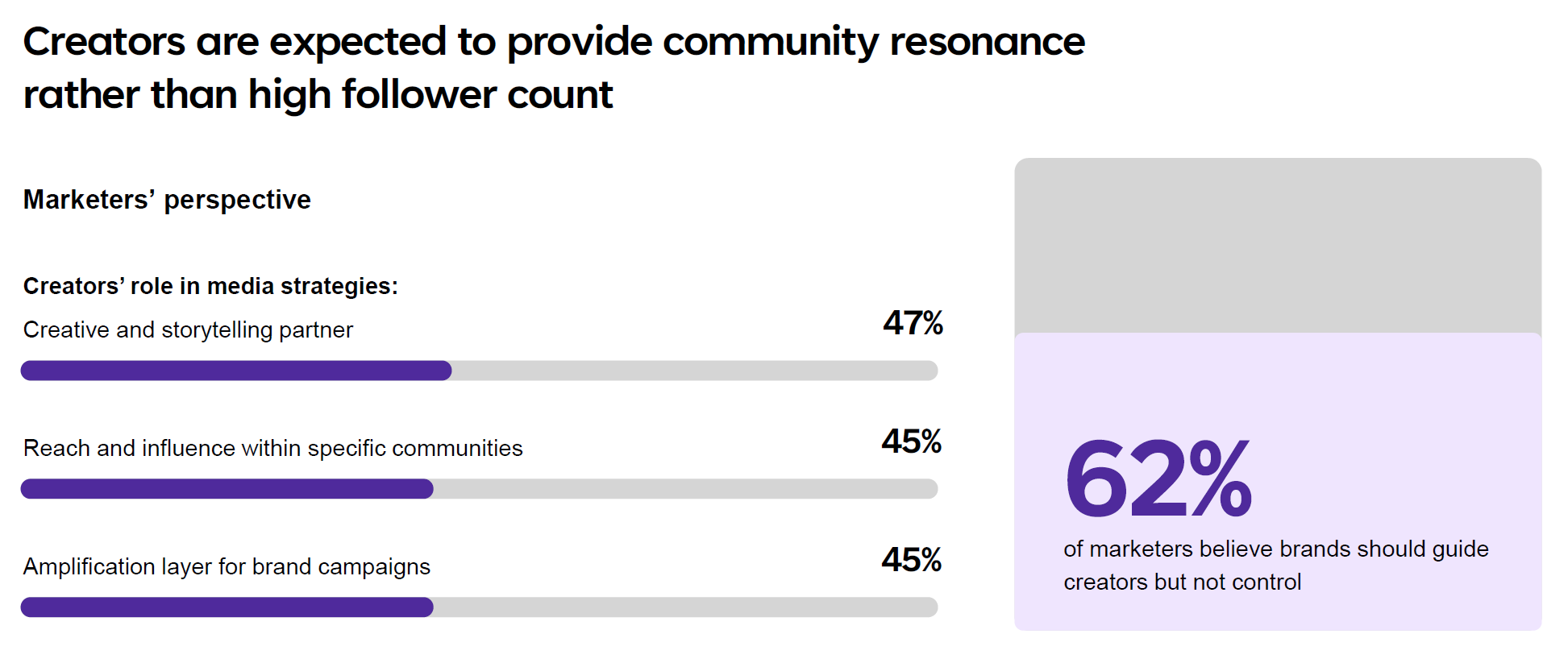
Over nine in ten of marketers globally (91%) use creators, making it a fully integral part of media mixes everywhere. And the relationship between brands and creators has matured. Over six in ten (62%) believe brands should guide creators rather than control them, and planned investment increases favour micro and nano creators over mega and macro ones.
This tells us that creators are now being valued for cultural relevance rather than just reach. Almost half of marketers see them as creative and storytelling partners (47%), and for their reach and influence within specific communities (45%). Consumers are listening too, with 20% saying creators are often their first source for discovering new products.
Top media brands: Where ad equity and money sit
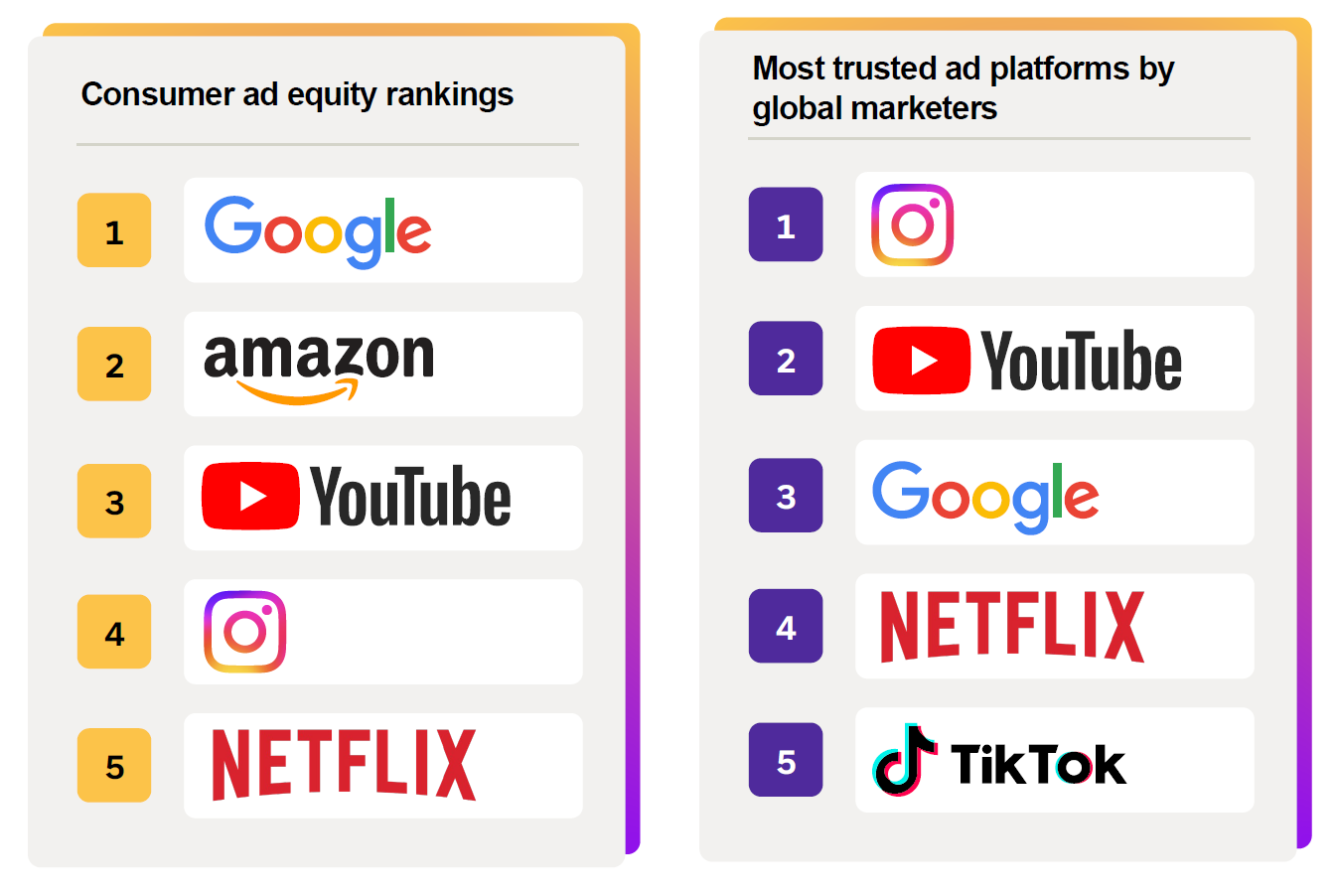
Google leads the global ad equity ranking among consumers, combining highly preferred ads with broad reach. Eight in ten consumers are exposed to ads on Google, and they see them as the most relevant and useful among global media brands. Amazon, YouTube, Instagram and Netflix complete the consumer top five.
Beyond the platforms with broad reach, Twitch, Disney+ and Pinterest also stand out on pure consumer preference, making them strong options for campaigns aimed at more specific audiences. Pinterest wins with particularly relevant and useful ads, Disney+ with fun and entertaining ads, and Twitch with better quality ads.
Marketers’ preferences continue to track their trust. YouTube leads on marketer receptivity, followed by Instagram, Google, TikTok and Netflix. Asked what earns their trust, marketers name measurement credibility and transparency first, then brand safety, then consumer receptivity to ads on the platform. Transparency is the price of entry, but it isn’t the only factor that counts; reach, where other brands appear and previous investment levels all play a part. In 2027, more than half of marketers globally plan to increase their spend on TikTok, followed by YouTube and Instagram. TikTok has been a constant destination for increased spend since its launch, and it now also sits among the brands marketers trust most.
Planning for 2027
Consumers are more open to advertising than they were a year ago, and that is a sign of marketers’ good work. The task now is to turn all the signals into clearer media decisions. Ad equity rankings are not a shopping list: assess each platform’s strengths and choose partners whose advertising proposition and formats fit your brand’s objectives. Consumer preference is a fundamental input because it demonstrably changes brand impact, but it works alongside reach and marketer trust.
The challenge for 2027 isn't finding more data, channels or technologies to consider. It's knowing which signals deserve your attention and which distract from better decisions. Media Reactions 2026 shows that while consumers are becoming more receptive to advertising, the media landscape is growing more complex as AI assistants, creator ecosystems and evolving platform dynamics reshape how people discover and engage with brands. The marketers that succeed will be those who balance innovation with evidence, investing where consumer preference, trust and commercial impact align.
Learn more
Want to explore the findings in more detail? Watch the Media Reactions 2026 on-demand webinar and download the CMO Guide to discover the trends, rankings and practical recommendations shaping media strategy in 2027. Visit the Media Reactions hub.